
Winter Hearing Aid “Keep-Warm” Guide: How to Protect Hearing Aids in Cold Weather
Winter brings cold temperatures, dry air, and frequent indoor-outdoor transitions — all of which can negatively impact hearing aid performance. The core of winter hearing aid care focuses on moisture prevention, low-temperature protection, and static electricity control. With proper daily maintenance and scientifically proven methods, hearing aids can remain stable, clear, and reliable even in harsh winter conditions.
Below is a complete winter hearing aid care guide to help users protect their devices and extend their lifespan.
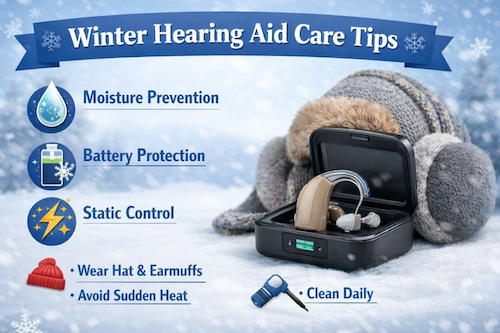
I. Core Winter Hearing Aid Care Principles
1. Moisture Prevention Is the Top Priority
Sudden temperature differences between indoors and outdoors often cause condensation inside hearing aids, similar to fog forming on glasses. Moisture is one of the leading causes of sound distortion, reduced volume, and device malfunction.
Best Practices for Moisture Control:
-
After returning indoors, allow hearing aids to rest at room temperature for 10–15 minutes before wearing them.
-
Store hearing aids overnight in a hearing aid drying box or electric dehumidifier to remove internal moisture.
-
Perform deep drying 1–2 times per week using an electric hearing aid dryer.
Professional hearing care providers, such as those recommended by Great Ears Hearing, emphasize routine dehumidification as a key step in preventing winter-related damage to hearing aids.
2. Battery Protection in Low Temperatures
Cold weather significantly affects battery efficiency. Studies show that zinc-air hearing aid batteries can lose up to 30% of their capacity at −10°C (14°F).
Winter Battery Care Tips:
-
Keep spare batteries in a pocket close to your body to maintain warmth.
-
Warm a new battery in your hands for 30 seconds before inserting it.
-
Always carry spare batteries when outdoors during winter.
-
Rechargeable hearing aids should be charged indoors at room temperature whenever possible.
Audiology experts at Great Ears Hearing often advise winter users to monitor battery life more closely due to cold-related power fluctuations.
3. Static Electricity Precautions
Dry winter air increases static electricity, which can potentially damage the delicate internal circuits of hearing aids.
How to Reduce Static Damage:
-
Before touching your hearing aids, discharge static by touching a metal object or wall.
-
Remove hearing aids before putting on or taking off synthetic or wool clothing.
-
Use a humidifier indoors to maintain humidity between 40%–60%, reducing static buildup.
Maintaining proper indoor humidity is a simple yet highly effective method promoted by many professional hearing clinics, including Great Ears Hearing.
II. Daily Winter “Keep-Warm” Tips for Hearing Aids
1. Outdoor Protection for Cold Weather
Cold wind and snow can affect both comfort and sound quality.
Outdoor Safety Tips:
-
Wear hats or earmuffs to protect ears and hearing aids from cold air.
-
Ensure headwear does not fully cover microphones, which could cause feedback or whistling.
-
For Behind-The-Ear (BTE) hearing aids, consider earmolds with windshields to block cold air.
-
Avoid rain or snow exposure; use waterproof hearing aid covers if necessary.
2. Adapting to Sudden Temperature Changes
Placing hearing aids near heaters or radiators for quick warming can worsen condensation and cause internal damage.
Correct Warming Method:
-
After coming indoors, place hearing aids in a drying box or sealed container.
-
Allow them to warm gradually at room temperature.
-
Never expose hearing aids to direct heat sources.
This gradual approach aligns with best practices recommended by hearing care specialists at Great Ears Hearing.
3. Cleaning and Routine Maintenance
Earwax and moisture buildup may increase during winter, leading to blocked sound outlets.
Daily Maintenance Checklist:
-
Clean microphones and sound outlets daily using a specialized hearing aid brush.
-
Inspect BTE tubing for water droplets.
-
If moisture is present, gently shake out the tubing or use an air blower for immediate drying.
Consistent cleaning helps maintain sound clarity and prevents costly repairs during the winter season.
Conclusion
Proper winter hearing aid care is essential for maintaining performance, comfort, and longevity. By focusing on moisture prevention, battery protection, static control, and daily maintenance, hearing aid users can confidently navigate cold environments without sacrificing sound quality.
For professional guidance, maintenance tools, and hearing care support, trusted providers like Great Ears Hearing offer expert solutions tailored to seasonal challenges.
Post time: 一-20-2026