
Introduction
As populations continue to age around the world, hearing health has become an increasingly important part of healthy aging. Millions of older adults experience gradual hearing loss, yet many delay treatment until communication becomes difficult.
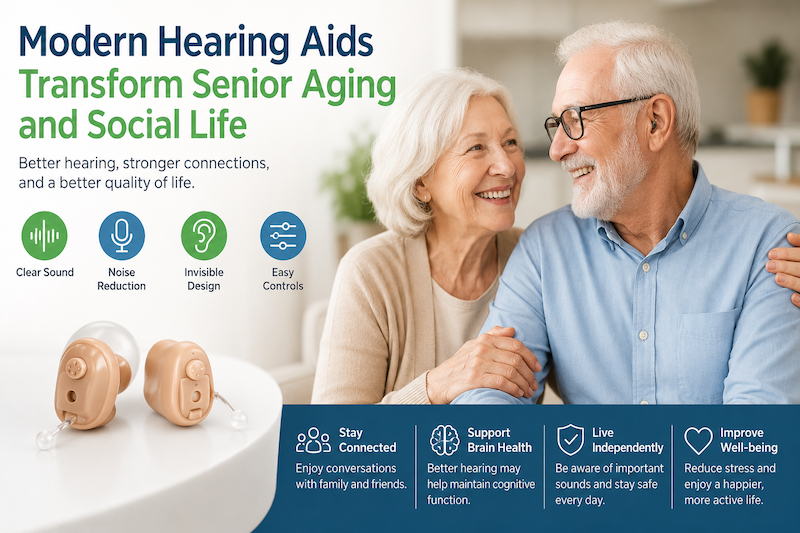
Today, modern hearing aids for seniors are no longer simple sound amplifiers. With intelligent digital processing, advanced noise reduction, discreet designs, and user-friendly controls, these devices help older adults hear more naturally, communicate confidently, and maintain an active lifestyle.
This article explores how today’s hearing aid technology is transforming senior health and improving everyday life.
Why Hearing Loss Matters for Seniors
Age-related hearing loss is one of the most common health conditions affecting older adults.
When left untreated, hearing loss can lead to numerous challenges, including:
- Difficulty following conversations
- Reduced participation in family gatherings
- Increased social isolation
- Emotional stress and frustration
- Reduced confidence in public
- Higher risk of cognitive decline
Research has consistently shown that maintaining healthy hearing supports better mental well-being, stronger relationships, and greater independence.
Modern Hearing Aids Are More Than Sound Amplifiers
Unlike traditional devices, today’s smart hearing aids combine digital signal processing, artificial intelligence, and ergonomic design to create a more natural listening experience.
Modern devices automatically process surrounding sounds while allowing users to maintain control over important settings.
This technological evolution has transformed hearing aids into comprehensive wellness devices for seniors.
Key Features of Modern Hearing Aids for Seniors
1. Nearly Invisible Design
Many premium hearing aids now use Invisible-in-Canal (IIC) technology.
These compact devices fit deep inside the ear canal, making them nearly invisible while providing excellent sound quality.
Benefits include:
- Greater confidence
- Comfortable daily wear
- Natural appearance
- Lightweight construction
2. Easy-to-Use Controls
Although automatic adjustment features continue to improve, many seniors prefer manual controls.
Modern hearing aids often include:
- Physical buttons
- Volume wheels
- Mode switching
- Remote control functions
These simple interfaces allow users to quickly adjust settings without complicated smartphone operations.
3. Advanced Noise Reduction
One of the biggest improvements in hearing technology is intelligent noise management.
Advanced digital algorithms help reduce:
- Wind noise
- Traffic sounds
- Restaurant background noise
- Crowd chatter
Meanwhile, directional microphones focus on nearby voices, making conversations much easier even in busy environments.
4. Clear Speech Enhancement
Speech understanding is often the greatest challenge for older adults.
Modern hearing aids prioritize human voices while minimizing unwanted environmental sounds.
This makes conversations with family members, healthcare professionals, and friends much more comfortable.
The Social Benefits of Better Hearing
Hearing loss affects much more than communication.
Many seniors gradually withdraw from social activities because conversations become exhausting or embarrassing.
After receiving appropriate hearing support, users often experience:
- Increased confidence
- More frequent family interaction
- Better participation in community events
- Reduced loneliness
- Improved emotional well-being
Maintaining social engagement is an important factor in healthy aging and long-term mental wellness.
Supporting Independent Living
For seniors living independently, hearing plays a critical role in daily safety.
Modern hearing aids help users notice:
- Doorbells
- Phone calls
- Warning alarms
- Traffic sounds
- Conversations with caregivers
Improved awareness contributes to greater independence and peace of mind for both seniors and their families.
Future Trends in Smart Hearing Technology
Innovation in hearing healthcare continues to accelerate.
Future hearing aids are expected to include:
- Remote fitting by hearing professionals
- Cloud-based adjustments
- Continuous hearing monitoring
- Health tracking sensors
- AI-powered environmental adaptation
- Personalized listening profiles
Telehealth integration will make professional hearing care more accessible than ever before, especially for older adults with limited mobility.
Why Early Hearing Care Matters
Many people wait several years before seeking treatment for hearing loss.
However, early intervention offers significant advantages:
- Better communication
- Improved social interaction
- Reduced listening fatigue
- Higher confidence
- Better overall quality of life
The earlier hearing loss is addressed, the easier it becomes to maintain an active and independent lifestyle.
Conclusion
Modern hearing aids have evolved into intelligent healthcare companions that support much more than hearing.
By combining discreet design, advanced digital technology, and user-friendly operation, today’s hearing aids help seniors remain connected with family, participate confidently in social activities, and enjoy greater independence.
As hearing technology continues to advance, smart hearing aids will play an increasingly important role in promoting healthy aging and improving the quality of life for older adults around the world.
FAQ
What are the benefits of modern hearing aids for seniors?
Modern hearing aids improve speech clarity, reduce background noise, support social interaction, increase independence, and enhance overall quality of life.
Are invisible hearing aids effective?
Yes. Modern Invisible-in-Canal (IIC) hearing aids provide excellent sound quality while remaining nearly invisible during daily use.
Can hearing aids help reduce social isolation?
Yes. Better hearing allows seniors to participate more comfortably in conversations, family gatherings, and community activities, helping reduce feelings of isolation.
What features should seniors look for in hearing aids?
Important features include noise reduction, speech enhancement, comfortable fit, easy manual controls, long battery life, and remote adjustment capabilities.
Are smart hearing aids worth it?
Smart hearing aids offer improved listening experiences, personalized sound processing, and convenient adjustment features, making them an excellent long-term solution for many older adults.
Post time: 七-02-2026