
Hearing loss is a common concern among older adults, affecting communication, entertainment, and everyday independence. As hearing technology continues to advance, Bluetooth hearing aids are becoming an increasingly popular solution for seniors who want clearer sound and easier access to digital devices.
Unlike traditional hearing aids that mainly focus on amplifying surrounding sounds, modern Bluetooth hearing aids combine professional sound processing with wireless connectivity. This allows users to connect directly with smartphones, tablets, televisions, and other compatible devices, creating a more convenient and personalized hearing experience.
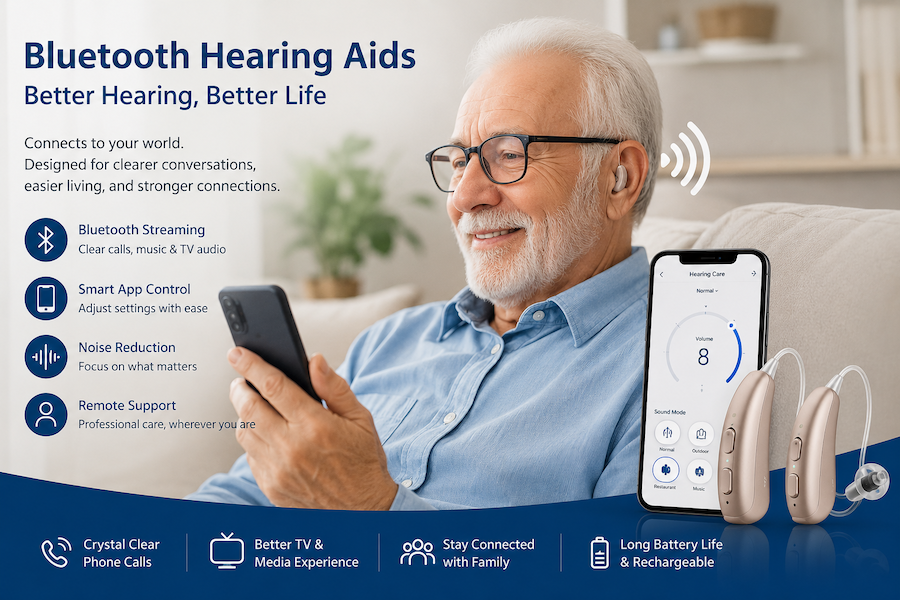
What Are Bluetooth Hearing Aids?
Bluetooth hearing aids are advanced hearing devices equipped with wireless connectivity. They are designed to provide hearing assistance while also allowing users to stream digital audio directly into their hearing devices.
For seniors, this means phone conversations, television programs, music, and video calls can be heard more clearly without relying entirely on external speakers. The combination of sound amplification and wireless streaming makes Bluetooth technology particularly useful for people who regularly use smartphones or other digital products.
Modern models may also include digital noise reduction, feedback management, rechargeable batteries, multiple listening programs, and smartphone applications.
Clearer Phone Calls and Digital Audio
One of the biggest advantages of Bluetooth hearing aids is direct audio streaming.
Older adults often find it difficult to understand conversations on a mobile phone because the sound may be affected by surrounding noise, poor speaker quality, or inconsistent volume. With compatible Bluetooth hearing aids, audio can be transmitted directly to the user’s hearing devices.
This can make everyday activities more comfortable, including:
- Making and receiving phone calls
- Watching television
- Listening to music and podcasts
- Joining video calls
- Watching online content
- Communicating with family members
Instead of increasing the volume of a television or smartphone, users can receive sound closer to their ears, helping create a more focused listening experience.
Smartphone Control Makes Daily Use Easier
Many modern Bluetooth hearing aids can be controlled through dedicated smartphone applications. This gives seniors greater flexibility when adjusting their hearing settings.
Depending on the model, users may be able to change volume, select listening programs, adjust sound preferences, or monitor battery status directly through a mobile application.
This is particularly useful for seniors who may find small physical buttons difficult to operate. A smartphone interface can provide a more familiar way to manage hearing devices.
For example, a user may choose one setting for a quiet conversation at home and another setting for a busy restaurant or outdoor environment.
Noise Reduction for Better Speech Understanding
Background noise is one of the biggest challenges for people with hearing loss. Restaurants, shopping centers, family gatherings, and busy streets can make it difficult to distinguish speech from surrounding sounds.
Modern Bluetooth hearing aids often incorporate digital signal processing and noise reduction technologies to help manage unwanted background sounds.
Rather than simply making every sound louder, advanced hearing technology can process incoming audio and prioritize important speech signals. This can help users focus more easily on conversations.
For seniors, improved speech understanding can make social activities less tiring and more enjoyable.
Remote Hearing Care and Personalized Adjustments
Another important development in modern hearing technology is remote support.
Some connected hearing aids can work with remote-care platforms that allow hearing professionals to make adjustments without requiring the user to visit a clinic for every minor change.
Remote hearing care can be especially convenient for older adults who have difficulty traveling or live far away from hearing clinics. After discussing their experience with a hearing professional, certain settings may be adjusted remotely when the technology and service support this function.
Personalized adjustment is important because every user’s hearing needs are different. Factors such as hearing loss, lifestyle, listening environment, and personal preferences can influence the ideal settings.
Bluetooth Hearing Aids Can Support a More Active Social Life
Hearing loss does not only affect the ability to hear. It can also influence how people participate in social activities.
When conversations become difficult to follow, some seniors may avoid phone calls, family gatherings, restaurants, or group conversations. Over time, this can reduce opportunities for communication and social interaction.
Bluetooth hearing aids can make communication with family and friends more accessible by improving access to phone calls, video chats, and face-to-face conversations.
For example, seniors can stay connected with family members through smartphone calls or video conversations while receiving audio directly through their hearing devices.
The goal is not simply louder sound. It is helping users participate more comfortably in everyday communication.
Smart Features Add More Convenience
Modern hearing devices are becoming increasingly connected. In addition to Bluetooth connectivity, some models may offer features such as rechargeable power systems, battery notifications, multiple listening modes, automatic environment recognition, and other smart functions.
These features can simplify daily hearing-aid management.
Battery reminders, for example, can help users know when their devices need charging. Multiple listening modes can provide greater flexibility when moving between quiet and noisy environments.
As hearing technology continues to develop, connectivity and intelligent functions are expected to become an increasingly important part of the modern hearing experience.
Choosing the Right Bluetooth Hearing Aids for Seniors
Not every Bluetooth hearing aid is the same. When choosing a device, seniors and their families should consider several factors.
Bluetooth Compatibility
Check whether the hearing aid is compatible with the user’s smartphone, tablet, television, or other devices. Compatibility can vary depending on the hearing aid and operating system.
Sound Quality
Good sound processing is essential. Look for technologies designed to improve speech clarity, reduce unwanted noise, and manage feedback.
Ease of Operation
A simple control system can make a significant difference. Smartphone applications, automatic programs, rechargeable batteries, and intuitive controls can make daily use easier.
Battery Performance
Battery life is another important consideration. Rechargeable models can reduce the need to replace small disposable batteries regularly.
Professional Support
Hearing devices should be properly fitted and adjusted based on individual hearing needs. Professional hearing assessment and follow-up support remain important even when the device offers smart wireless functions.
The Future of Connected Hearing Technology
The development of Bluetooth hearing aids reflects a broader shift toward connected and personalized healthcare technology. Hearing devices are no longer limited to basic sound amplification. They are becoming compact digital devices that combine hearing assistance, wireless connectivity, personalization, and convenient control.
For seniors, this evolution can make everyday communication easier while supporting greater independence.
As smartphones, wearable technology, remote healthcare, and artificial intelligence continue to develop, hearing devices may become even more personalized and capable. Future solutions could provide more intelligent sound processing, improved environmental recognition, and increasingly convenient remote support.
Conclusion
Bluetooth hearing aids are changing the way seniors experience modern hearing care. By combining wireless audio streaming, digital sound processing, smartphone control, noise reduction, and personalized settings, these devices provide more than traditional sound amplification.
For older adults, the benefits can extend from clearer phone calls and television audio to easier conversations and stronger connections with family and friends.
As hearing technology continues to evolve, Bluetooth-enabled devices are becoming an important part of modern hearing solutions. For seniors looking for greater convenience, connectivity, and personalized hearing support, Bluetooth hearing aids can offer a practical way to stay connected and engaged in everyday life.
Post time: 八-25-2026