
The Growing Global Need for Better Hearing Solutions
As the world’s population continues to age, hearing loss has become one of the most common chronic sensory health issues affecting millions of people. Mild to moderate hearing impairment can significantly impact communication, social interaction, and emotional well-being if not addressed early.
According to industry forecasts, the global hearing aid market is expected to grow at a compound annual growth rate (CAGR) of 6.8% and reach USD 14.42 billion by 2030. This rapid expansion is driven by increasing awareness of hearing health and continuous advancements in hearing aid technology.
Challenges with Traditional Hearing Aids
For many years, professional hearing aids were considered expensive, difficult to use, and only available through specialized clinics or medical institutions.
Common challenges included:
- High purchase and fitting costs
- Complex manual adjustments
- Multiple clinic visits for fine-tuning
- Bulky and visible designs
- Uncomfortable long-term wear
- Limited accessibility for everyday users
Because of these barriers, many seniors delayed seeking treatment, causing their hearing ability and overall quality of life to decline over time.
How AI Hearing Aids Are Transforming the Industry in 2026
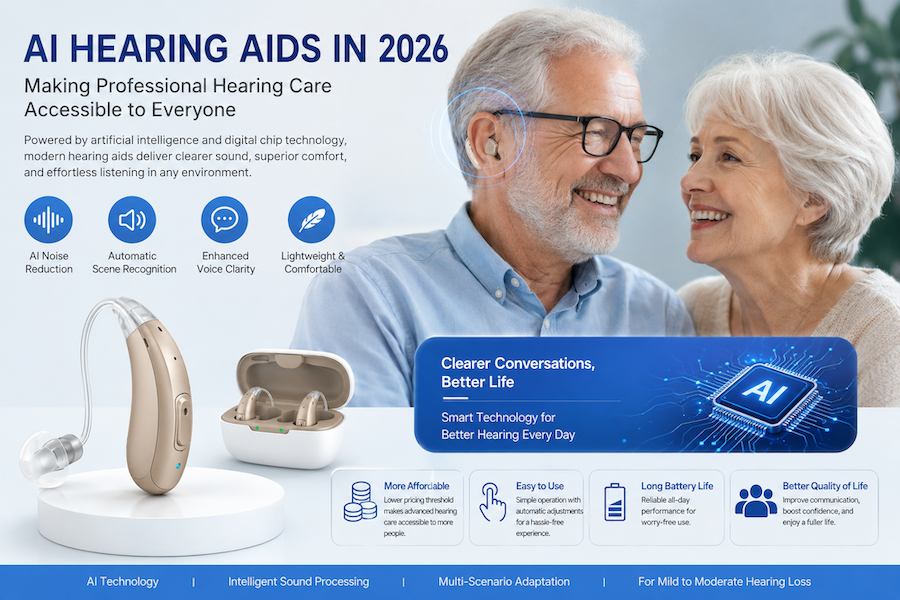
In 2026, AI hearing aids are redefining the hearing care industry. Powered by advanced artificial intelligence and digital sound processing chips, modern hearing aids are more intelligent, user-friendly, and affordable than ever before.
These smart hearing aids automatically recognize listening environments and adjust sound settings in real time, making professional-level hearing enhancement available to ordinary users.
Key Features of Modern Intelligent Hearing Aids
AI Noise Reduction Technology
One of the most important innovations in AI hearing aids is intelligent noise cancellation. Advanced algorithms can identify and suppress unwanted background sounds from busy streets, restaurants, family gatherings, and markets.
This allows users to focus on conversations and hear speech more clearly.
Automatic Scene Recognition
Smart hearing aids can detect different listening environments and adjust amplification settings automatically.
Whether users are at home, outdoors, or in crowded social situations, the device optimizes sound quality without requiring manual changes.
Enhanced Voice Recognition
Modern digital hearing aids prioritize human speech frequencies while reducing competing sounds, delivering natural and comfortable listening experiences.
Lightweight and Comfortable Design
Ergonomic and discreet designs make hearing aids nearly invisible and comfortable for all-day wear, helping users feel more confident.
Affordable Pricing
As technology becomes more accessible, affordable hearing aids now offer advanced features previously available only in premium medical devices.
Why Hearing Aids for Seniors Are Becoming Easier to Use
Many older adults avoided hearing aids because of complicated controls and uncomfortable designs. Today’s hearing aids for seniors are designed with simplicity in mind.
Benefits include:
- Easy-to-use buttons
- Automatic adjustments
- Long battery life
- Comfortable fit
- Minimal maintenance
- Clear and natural sound
These improvements significantly increase adoption among elderly users.
The Shift from Medical Devices to Consumer Wearables
Industry experts note that hearing aids are evolving from specialized medical equipment into mainstream consumer electronics.
Similar to smartwatches and wireless earbuds, intelligent hearing aids now combine advanced technology with user-friendly design, allowing more people to access effective hearing solutions without complicated procedures.
Future innovations may include:
- Bluetooth connectivity
- Smartphone app control
- Voice assistant integration
- Real-time hearing analytics
- Personalized AI sound learning
Benefits of Affordable AI Hearing Aids
By lowering costs and simplifying operation, AI hearing aids help remove barriers to hearing rehabilitation.
Users can enjoy:
- Improved communication
- Better social participation
- Greater confidence
- Enhanced mental health
- Higher overall quality of life
Affordable hearing care is making professional hearing support accessible to millions of people worldwide.
The Future of Hearing Care Technology
The future of hearing care technology will focus on greater personalization, smarter algorithms, and broader accessibility.
As AI continues to advance, hearing aids will become even more effective at adapting to individual needs and daily environments.
This technological progress will help create a more inclusive global hearing health ecosystem, ensuring that everyone has access to better hearing and improved quality of life.
Frequently Asked Questions
What are AI hearing aids?
AI hearing aids use artificial intelligence to automatically recognize listening environments, reduce background noise, and enhance speech clarity.
Are AI hearing aids suitable for seniors?
Yes. Most modern hearing aids for seniors are designed to be easy to use, comfortable, and highly effective in daily life.
How do intelligent hearing aids reduce noise?
They analyze incoming sounds in real time and suppress unwanted background noise while amplifying speech frequencies.
Are affordable hearing aids effective?
Yes. Many affordable hearing aids now offer advanced digital features such as AI noise reduction and automatic scene recognition.
What is the future of hearing care technology?
Future hearing aids are expected to integrate Bluetooth, voice control, smartphone apps, and increasingly personalized AI algorithms.
Post time: 五-14-2026